

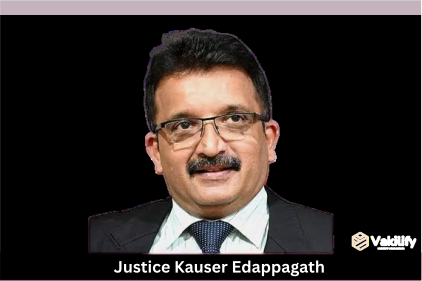
The Kerala High Court has ruled that jobless wife maintenance is a legal entitlement under Section 125 CrPC. It was clarified by Justice Kauser Edappagath that the law is to be interpreted as actual inability to sustain rather than mere potential earning capacity, so that highly qualified but unemployed wives are not denied support
📜 Case Background: Ratheesh Chandran v. Rema Devi S and Anr.
| Detail | Description |
|---|---|
| Court | Kerala High Court |
| Judge | Justice Kauser Edappagath |
| Statute | Section 125 CrPC (Section 144 BNSS) |
| Petitioner | Husband-Ratheesh Chandran |
| Respondents | Wife and Child |
| Family Court Order | ₹6,000 for wife, ₹4,500 for child |
| High Court Decision | Revision petition dismissed; maintenance upheld |
The husband argued that his wife, being a qualified teacher, had the capacity to earn and therefore was not entitled to maintenance. He also claimed she left his company without valid reason. The Family Court rejected these arguments, and the High Court upheld that decision.
🧑⚖️Court’s Observations on Section 125 CrPC
“The expression ‘unable to maintain’ in Section 125 CrPC must be interpreted to mean actual inability to sustain rather than mere potential earning capacity.” — Justice Kauser Edappagath
- A wife cannot be denied maintenance merely because she is qualified or capable of earning.
- The test is whether she can maintain herself in the same standard of life as with her husband.
- Section 125 CrPC is a social justice measure, enacted to protect women, children, and parents.
- Relief for the intended class is to be secured by beneficial legislation being interpreted liberally.
🔍 Precedents Cited
- Rajnesh v. Neha (2021) 2 SCC 324 – Even an earning wife may be entitled to maintenance if income is insufficient.
- Jayaprakash E.P. v. Sheney P. (2025 (1) KLT 815) – Temporary or insufficient income does not bar maintenance claims.
💬 Vakilify Insight
This ruling strengthens the protective scope of Section 125 CrPC, ensuring that women are not denied maintenance based on theoretical earning capacity. It emphasises actual financial independence over mere qualifications, aligning with the constitutional vision of social justice under Articles 15(3) and 39
🔗 Related Reading and Links